- B Series Intranet Search And Settings Descargar
- B Series Intranet Search And Settings - Atwebpages.com
- MANUAL CASTELLANO CAMARA IP B SERIES MODEL No 541W ...
Setting up a secure and reliable intranet requires these components:
- Web server (hardware and software)
- Networked PCs
- Firewall hardware and software
- Content Management Software
- Other Application software
[source: University of South Carolina School of Library and Information Sciences].
- The settings there had the same sites listed as the 'Internet Explorer Settings GPO', but the values were missing. The values should have been '1 - Intranet', '2 - trusted' etc. Anyways, I removed Zone mappings settings completely from default domain policy and it worked.
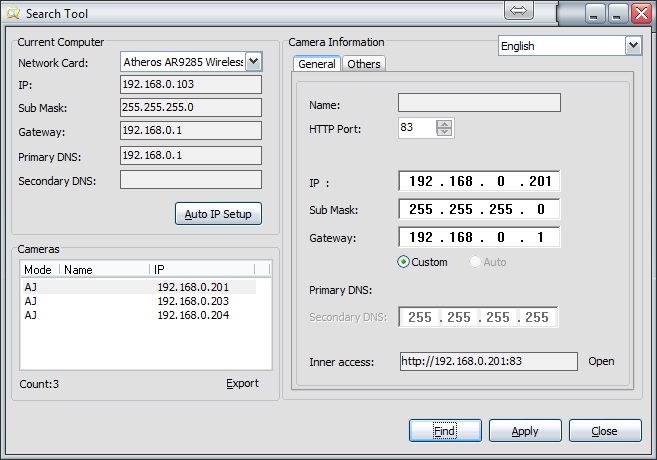
- With this protocol, you can search and change the network configuration of ipcameras with intranet. B-Series IP camera URL. The settings for B-Series cameras are built right. If you need to modify the URL then add or edit the B-Series camera and you can.
Intranet Portals and Scent are Made for Each Other UIETips, December 12, 2005 by Jared M. Describes how Intranet portals can use Information Foraging Theory to create usable and helpful interfaces. Mentions the value of search logs in identifying problems with navigation, but includes the usual UIE bias against search. Search the world's information, including webpages, images, videos and more. Google has many special features to help you find exactly what you're looking for.
Advertisement
Advertisement
A Web server is two things: hardware and software. The hardware you use for an intranet Web server depends on the intranet's size, the content to be published and the number of people accessing the intranet at any given time.
For example, if your intranet is text-only Web pages being accessed by five people, you don't need a powerful machine running your server software. If you're going to use your intranet to host streaming video to be accessed by thousands of employees at once, then you'll need a large, dedicated server or cluster of servers with significant bandwidth.
The server software handles all requests for files hosted on the server, finds the file and sends it off to the right computer. The most popular Web server software, Apache, is free. The second most popular Web server software is Microsoft Internet Information Server.
As for installing and configuring the Web server in a network, a company must first consider how critical the intranet will be for day-to-day operations. The more the intranet is used for 'core business processes,' the more redundancy needs to be built into the system [source: Intranet Journal].
In organizations where the intranet is a low-priority application, it's OK to throw everything in the same box: Web server, databases, applications and Web page content [source: Intranet Journal]. In companies where employees rely more heavily on the intranet for Web-based business applications, it's smart to employ a backup server or even a networked server cluster that share responsibilities. In those cases, it's also smart to host databases on separate machines so that if one server goes down, the rest can still access the databases [source: Intranet Journal].
For employees to access the intranet, their computers need to be connected to the organization's local area network (LAN). These computers also need to have Web browser software like Internet Explorer, Firefox or Safari.
Firewall hardware and software both accomplish the same thing -- they're the gatekeepers. Firewalls stand between the outside Internet and the corporate intranet, monitoring all incoming and outgoing data packets for unauthorized or suspicious requests [source: Vicomsoft]. A firewall is essential for intranet security, particularly if the intranet includes extranet extensions or allows remote login from outside of the corporate LAN [source: Intranet Journal].
For creating, publishing and managing the content on the intranet, most companies use a content management system (CMS), a Web-based application that makes it easy to create standardized Web content without having to know HTML or other programming languages [source: KM Column]. The CMS can be hosted on the Web server or on a separate applications server.
Other software can be loaded onto the intranet Web server or applications server as the company sees fit. This may include a Web-based conferencing application, a project management tool or a comprehensive CRM tool like SAP or PeopleSoft.
B Series Intranet Search And Settings Descargar
If you don't want to worry about setting up servers and installing software, you could subscribe to a hosted intranet service where your intranet is hosted by a third-party for a monthly fee. You would access the intranet by logging into the service provider's
B Series Intranet Search And Settings - Atwebpages.com
Now let's take a look at the future of intranets.
In our last post, Simpplr Features that Matter: Smart Search, we discussed what high-level capabilities are necessary in an intranet search engine tool and its importance to prevent intranet failure. In this post, we want to expand on how search is critical to driving higher intranet employee engagement, describe several use cases, and dive deeper into Simpplr’s Smart Search.
How is Simpplr’s Smart Search different?
When we designed our intranet search capability, we first focused on understanding user behavior. We learned that users are programmed to find information either through their homepage experience or directly through the search navigation. We took this knowledge and implemented this into our intranet design and search development. Rather than take an “off-the-shelf” approach to search, we’ve purpose-built and tuned our search engine algorithms specifically for intranet use cases.
6 key requirements for your intranet search engine

Based on our research and understanding of user behavior, we believe there are six requirements that your intranet search needs in order to keep engagement high and intranet effective.
Intranet Search Requirement #1: Your intranet search engine should be smart
We already mentioned that we’ve built our search from a user’s perspective, not something that we just took off the shelf. From a technical point of view, Simpplr is powered by Elasticsearch and we’ve put AI-backed intelligence into its search engine algorithms to provide users more relevant search results. The underlying algorithms built into search include all sorts of AI approaches including contextual search, fuzzy search, spelling correction, phonetic search, stemming, auto-complete, and more. As a result, search helps users search and retrieve the most relevant results in the most efficient way.
Intranet Search Requirement #2: Your intranet search engine should be personalized
Simpplr’s Smart Search incorporates behavioral data such as sites and people you follow or belong to, previous searches, and content you have engaged with (such as liked, favorited, commented). Simpplr’s search will prioritize results based on behavioral data. Because Simpplr is an inherently social system, Simpplr’s search is able to take popularity into account as it returns search results.
Intranet Search Requirement #3: Your intranet search engine should be federated
Modern employee intranets today are well-integrated with today’s best-in-cloud management applications. Integrations are helpful and help improve employee productivity, but only when it’s pertinent to the intranet experience. When organizations use multiple cloud-based management systems, it’s critical to have a built-in federated search.
Federated search allows users to retrieve both native intranet content (such as sites, pages, events, photo/video albums, people) and files stored in integrated applications, such as Box, GoogleDrive, SharePoint, OneDrive, Dropbox without additional code or configurations. This is important because users won’t have to bounce around to multiple locations to search within multiple systems. Having an integrated federated search frees up users’ time and alleviates frustration so that users are more productive. Files can be linked to department file libraries, attached to pages, or attached in the social feed. Most importantly, files do not need to be migrated or uploaded into Simpplr for them to be searched or downloaded from the intranet.
Intranet Search Requirement #4: Your intranet search engine should be curated

MANUAL CASTELLANO CAMARA IP B SERIES MODEL No 541W ...
With Simpplr, content is smartly linked to the intranet so search results don’t retrieve every document across the enterprise. This is done by allowing site managers to map to external systems at the folder level. So, for example, an HR manager may link the intranet to the “Approved Benefits Documents” folder but not to their “Work In Progress” folder. This level of curation allows Simpplr’s search to be much more reliable for the end user than even searching directly in Box or Google Drive because they would return an overwhelming amount. Some intranets integrate Google Drive directly, or they tie Google Drive search into another federated search tool, such as Google Cloud Search. The challenge here is that they return the same bad result set as Google Drive. In contrast, Simpplr only returns search results from the curated folders that site managers have explicitly linked to the intranet.
Intranet Search Requirement #5: Your intranet search engine should be purpose-built for intranet use cases
We’re seeing a lot of companies defaulting to using intranet search through a global search application or a cloud version of intranet search. It’s a bad idea! Why? People come to the intranet for clarity and the intranet should be reserved for the most critical information across departments and location lines.
Your intranet’s search needs to be not only smart but purpose-built so that returned results are relevant to what you’re exactly looking for. For example, if someone from the Sales team is searching for release notes, surfacing hundreds of Jira tickets that belong in the Engineering team is not relevant to the Salesperson. Instead, your intranet search should retrieve a summary of quarterly releases that intranet users are searching for.
Intranet Search Requirement #6: Your intranet search engine should be fast and secure
In today’s world, users expect things to be instant whether it’s instant messaging, on-demand services, or instant search results. For many solutions, intranet search performance lags behind users’ expectations because intranets need to process so much information.


Simpplr’s underlying search is server-side optimized to provide the fastest results possible with today’s technology. With horizontal scalability, it can handle billions of rows of data without skipping a beat. Search is monitored 24/7 and backed up every 30 minutes. It’s also secure and compliant with the latest standards including FIPS 140-2, SOC-2, HIPAA, PCI DSS, FISMA, ISO, or GDPR. To learn more about Simpplr’s security, click here.
Why search is critical to avoid intranet failure
If you’re evaluating intranets, make sure that an intranet search engine is at the top of your list. We’ve used research to help us purposefully guide our features and functions so that we keep employee engagement high. With the understanding of user expectations and how they interact with intranets, we invested a tremendous amount of effort in building out our Smart Search to accomplish exactly what they’re looking for.
To view our 10-min demo, watch below: